August 2026
Are you or someone you know considered “at-risk?” Being at-risk means facing circumstances or conditions that increase the likelihood of experiencing health, social, or economic challenges. These factors may include poverty, chronic stress, exposure to violence or trauma, limited access to healthcare, discrimination, or unstable housing. Being “at risk” does not define a person—it simply recognizes that additional support and resources may be needed to help promote health and well-being. The Transcendental Meditation technique is a well-documented effective tool providing benefits to girls and women who may be at-risk.
- Last month’s blog written by women for women
- Articles:
- What does it mean to be “at risk?”
- Audio interview: Dr. Sarina Grosswald on relieving trauma
- A meta-analysis of research published on TM and PTSD
- Sarah Sica on teaching TM to at-risk veterans, nurses, and more
Blog posts
Have you had a few minutes to read our July blog posts? If not, the links are below. You can also visit our blog homepage to use our search feature for a great range of interesting topics, including Unlocking Wellness:Help for Mental Health from 2025 and A Strike Against Stroke from 2024.
Development of Perfect Mind-Body Coordination: The TM Program to Improve Athletic Performance

Maharishi, July 27, 1975 Courchevel, France:
“It’s really very satisfactory to see that those experts in the body are now looking into the field of consciousness. Actually, consciousness is a field of all possibilities. All the athletes know that their mind has to be in deep coordination with the body for them to become a champion. So, the use of Transcendental Meditation in the field of athletes is growing very fast these days and it’s a very satisfying evidence that the whole consciousness of the masses, consciousness of the whole population is rising towards being more effective.”
An Interview of Dr. Amy Knoblock-Hahn: Advancing Health Through Nutrition and Lifestyle
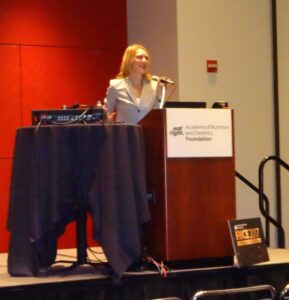
Dr. Amy Knoblock-Hahn, PhD, MPH, MS, RDN, LD is a nationally recognized nutrition scientist, registered dietitian, educator, and public health leader whose work integrates nutrition, technology, behavioral science, and food systems to improve health outcomes. A former faculty member at Saint Louis University and Fontbonne University, and currently a registered dietitian with the VA St. Louis Health Care System, she has conducted pioneering research in obesity prevent.ion, consumer health technologies, food security, sustainable nutrition, and health behavior change. She is currently serving as a public health officer at the St. Louis VA Hospital.
Articles
What Does it Mean to be At-Risk?

Who is “at risk?”
“At risk” means that a person or group has a higher chance of experiencing harm, problems, or a negative outcome than others. It doesn’t mean that the outcome is certain—only that the likelihood is greater.
For example, a child who isn’t getting enough food is at risk of poor growth and health problems, someone who smokes is at risk of developing lung disease, and a community in a floodplain is at risk of flooding during heavy rains. Police, firefighters, soldiers, nurses, doctors, school teachers, and everyone living below the poverty line are examples of those who might be at-risk. But, for example, even being a relentlessly overworked executive or a single mother can put someone in the situation of being at-risk; trauma and unrelenting fatigue and stress are causing an epidemic of at-risk populations in our society.
What does it mean to belong to an at-risk population?
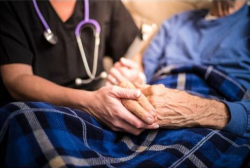
An at-risk population is a group of people who, because of social, economic, environmental, or health-related factors in common, are more likely to experience physical or mental health challenges, trauma, disease, or other adverse outcomes than the general population. These increased risks may result from factors such as war, trauma, domestic abuse, poverty, chronic stress, discrimination, limited access to healthcare, or other barriers that affect overall well-being.
Treatments that address the trauma that caused a person to be at-risk are “trauma-facing”—that means the trauma victim is required to remember and manage the memories of the trauma. In contrast, the Transcendental Meditation technique addresses the physiological foundations and effects of trauma—significantly reducing deeply rooted stress, fatigue, and imbalances. At the same time, the TM technique gives the mind an experience of profound inner peace and harmony. More than 20 published research studies have shown that Transcendental Meditation is as effective and is faster than a program called Prolonged Exposure (the military’s gold standard for PTSD recovery) without needing the psychological component in PE of recalling the suffering one had endured.
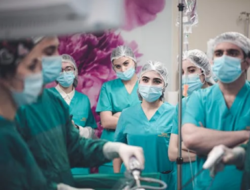
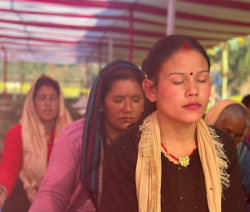
TM for Women has made a meaningful impact through programs serving women and girls at risk due to domestic abuse, the demands of nursing, the disparities faced by Indigenous communities, and the challenges faced by wives of veterans.
Interview of Dr. Sarina Grosswald
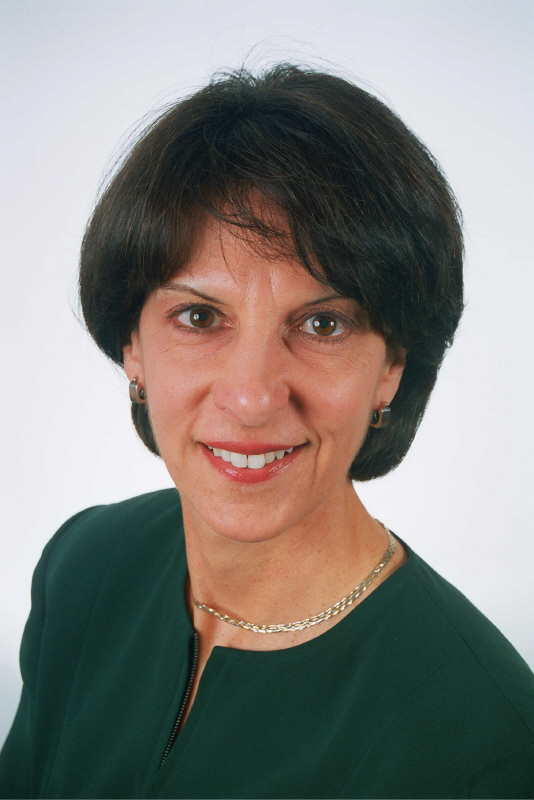
Dr. Sarina Grosswald held a doctorate in education, was an expert in cognitive learning, and was president of SJ Grosswald and Associates, a consulting firm in medical education in Arlington, Virginia. She was a leading authority on the use of the TM program for relieving symptoms associated with stress and trauma, ADHD, bipolar disorder, and Post Traumatic Stress Disorder in veterans.
Dr. Grosswald had published and lectured widely in the fields of medicine and education. In addition to scholarly journals, she was coauthor of The Resilient Warrior. Her work has been featured in US News and World Report, Business Week, Newsweek, International Herald Tribune, Barron’s, ABC news, and PBS.
In this fifteen-minute podcast interview with TM for Women, Dr. Grosswald beautifully and clearly revealed the meaning of being at-risk and the application of the Transcendental Meditation technique to at-risk populations.
Scientific Review and Meta-Analysis of Transcendental Meditation for Post-Traumatic Stress Disorder
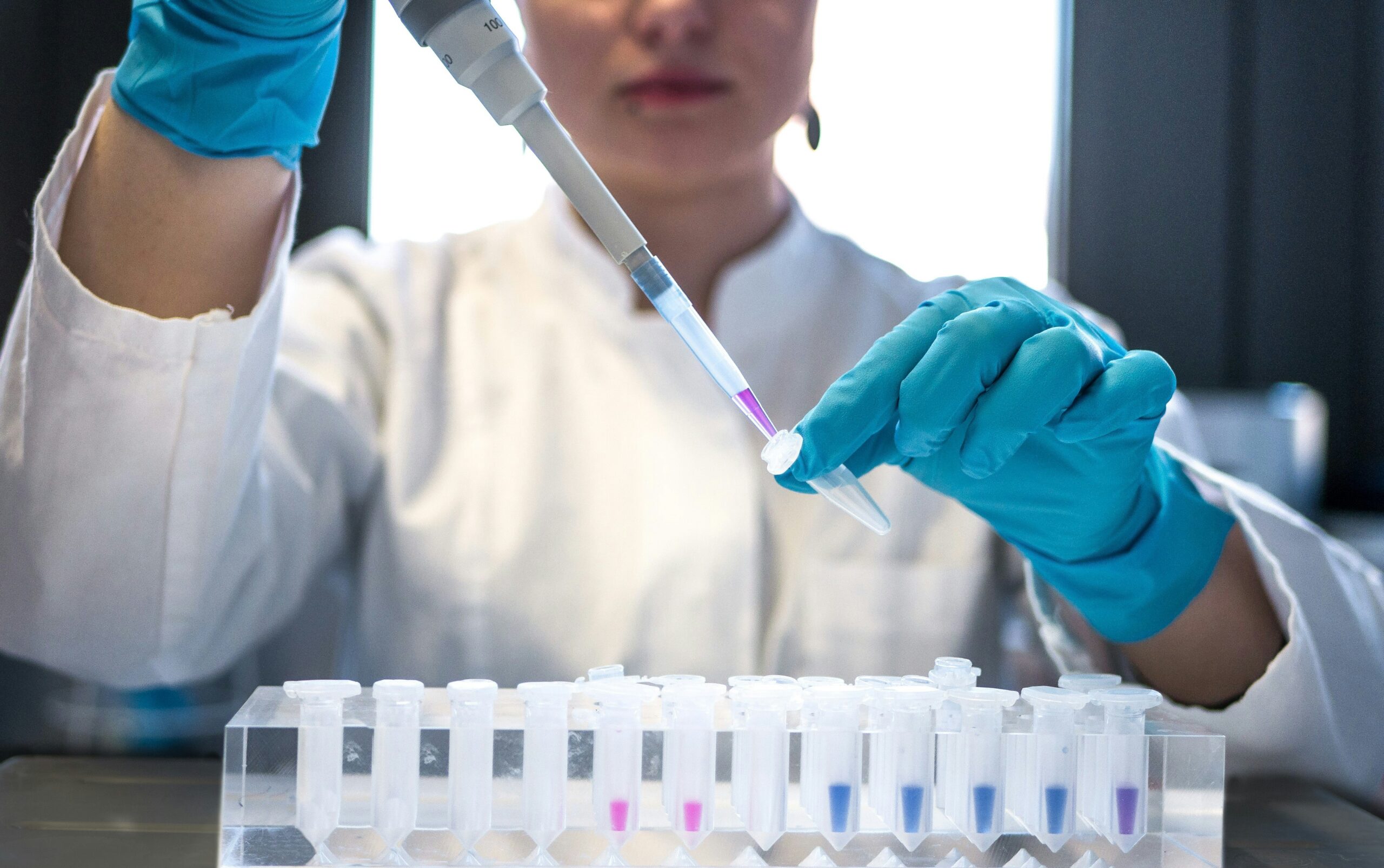
A meta-analysis is a statistical technique that combines the results of multiple individual studies addressing the same research question. By pooling data, it provides a much stronger, more reliable conclusion than any single study can offer on its own.
A meta-analysis published in the NIH publication Pub Med on April 3rd, 2025 of 61 studies demonstrates that TM is associated with large and clinically meaningful reductions in PTSD symptoms across multiple controlled studies.
According to the paper, TM may reduce PTSD through several complementary pathways:
1. Deep physiological rest reduces chronic hyperarousal
PTSD is characterized by a nervous system that remains in a persistent “fight-or-flight” state. People often experience hypervigilance, exaggerated startle responses, poor sleep, anxiety, and intrusive memories.
The authors propose that TM produces a unique state of deep restful alertness, allowing the body to recover from chronic sympathetic nervous system activation. Over time, this may reduce the hyperarousal that underlies many PTSD symptoms.
2. Normalization of the stress response
Trauma can dysregulate the body’s stress systems, including the hypothalamic-pituitary-adrenal (HPA) axis and the autonomic nervous system.
Previous research cited in the review suggests TM is associated with:
- lower sympathetic (“fight-or-flight”) activity
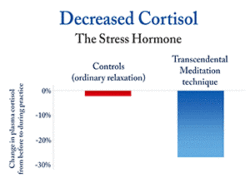
- reduced stress hormones
- improved autonomic balance
- greater physiological resilience to stress
As these systems normalize, PTSD symptoms may gradually lessen.
3. Reduction of the “stored effects” of chronic stress
The authors discuss TM as allowing the nervous system to release accumulated physiological stress during repeated periods of profound rest.
This is consistent with their observation that improvements occur not only in anxiety but also in:
- depression
- sleep
- emotional regulation
- overall PTSD severity
4. Improvements occur without repeatedly reliving the trauma
One notable finding in the review is that TM was non-inferior to prolonged exposure therapy, one of the leading evidence-based PTSD treatments, and participants improved more quickly during the early weeks of treatment.
Unlike exposure therapy, TM does not require patients to:
- recount traumatic experiences
- deliberately revisit traumatic memories
- cognitively process the trauma during practice
- Instead, symptom improvement appears to result from reducing overall physiological stress and improving nervous system functioning. The meta-analysis reports that TM was non-inferior to prolonged exposure at study completion and showed faster improvement by week six in one direct comparison.
5. Better emotional regulation
As physiological stress decreases, participants often report:
- fewer intrusive thoughts
- less anxiety
- improved sleep
- greater emotional stability
- reduced depression
- These improvements likely reinforce one another. Better sleep, for example, can reduce emotional reactivity, which in turn may lessen PTSD symptoms.
What the evidence shows—and what it doesn’t
The meta-analysis found:
- 1,248 participants
- benefits across civilian and military populations
- benefits in both men and women
- no evidence that any single study accounted for the overall effect
- no apparent publication bias
Sarah Sica on Teaching TM to Women and Girls At-Risk

Sarah Sica has had a successful career teaching the Transcendental Meditation program in different sectors of American society, especially populations with trauma and PTS and PTSD symptoms, including nurses, inner-city students and staff, veterans, and survivors of domestic violence. Over the years, she has also directed several TM initiatives, including for business professionals and government staff. And today Sarah serves as the National Director of the Nurses’ and Education Programs for TM for Women.
Here are some of Sarah’s insights on this topic of toxic stress and the power of TM:
“The brain is like a river, it’s not a rock. Our experiences change the brain. If we’re exposed to stress day in and day out, the brain learns to stay in a stress response, even when we are not in an emergency situation. The good news is, it can also unlearn that. If you’re adding a good habit like the practice of Transcendental Meditation, it helps the brain get out of that mode of stress. TM calms the amygdala, it brings blood flow back to the prefrontal cortex and creates a global coherence over the entire brain. Over time by practicing TM daily, this optimal way for the brain to function becomes the new default setting–we become more resilient to stress and more effective in our lives.
The National Institutes of Health has invested over 23 million dollars studying the effect of TM on hypertension over the years. But the focus in the research lately has shifted to how TM can help with trauma, PTS, and PTSD symptoms:
In a pilot randomized controlled trial done on 40 veterans, published in the Journal of Traumatic Stress in 2021, one group was assigned to learn TM and the other group was assigned treatment as usual. By the end of three months, 50 percent of the veterans that had learned TM had no more PTSD symptoms. Only 10 percent of the usual treatment group had no PTSD symptoms.
In 2020, during the height of COVID, another study (which was published in The Journal of Nursing Administration) was done in three magnet hospitals in Florida. One hundred and four nurses learned TM and were randomly assigned to learn TM immediately or to be the control group and wait for three months for training, but everyone got TM training in the end. Both groups were measured in three areas: anxiety, PTSD and burnout symptoms. Just one month in, the TM group had a 62% drop in anxiety symptoms and this held three months later with a 54% reduction in anxiety. The TM group had a 27% drop in burnout symptoms after one month and there was a 24% reduction still after three months of practice. And, finally, a 53% drop in PTSD symptoms in the TM group after just one month of practice and this held three months later with a 57% drop! There was virtually no change in controls in all three areas.
I am currently overseeing three studies being done on nursing staff and students in the United States. I also had the joy of getting to teach the nursing students and nurses on site at the college and the hospital. And it’s going to be really exciting when these studies are finished and we find out the results.
There’s an alarming statistic in our country: between 18 and 41% of nurses in their very first year of entering the workforce as a nurse end up leaving the profession forever because the stress is so high. And being a nurse is such an important role—really the backbone, the beating heart of the hospital, but it’s a tough job. And if you don’t have nurses, you don’t have a medical system—it’s quite serious. I’m so glad that nurses are getting to learn TM for free in these studies, because they really do deserve the benefits of TM, including decreased stress and compassion fatigue. They give so much every day.
Here is a powerful testimonial from a nurse who has been practicing TM for several years:
‘I didn’t realize how much I needed TM until I finally sat still long enough to try it. As a nurse and a mom, I’ve spent years being the queen of “just one more task and then I’ll rest.” Taking time for myself felt selfish—like stepping away from my patients, or my family, meant I was letting someone down.
But I look back now at that version of me—the one constantly scanning for the next crisis, planning for fires that might never come—and I know she wasn’t okay. She was surviving, not living.
TM gave me the tools to be okay. To breathe more deeply. To pause and actually feel life, instead of just making a task list of it. I was stunned at how easy it was to do. My mind is constantly working and this technique didn’t punish me for it. It accounts for it.
I’ll never forget a conversation with my teacher a few years later. I told her, “I remember in one of our follow-up calls, you said taking time for self-care isn’t selfish—it’s necessary. And it must’ve been the tenth time you said it before I started to believe it a little bit.”
My teacher laughed and said, “If it was during a follow-up call, I had probably said it over a hundred times by then.”
That stayed with me. Because she was right—I needed to hear it again and again, louder than the pulse in my head that always whispered, “just one more thing and then I’ll rest.”
Now, I smile when I think about it. Because I do rest. I do take that time. And I’m a better nurse, mom, friend, and human because of it. TM didn’t just help me function—it helped me return to myself. And for that, I’ll always be grateful.’
— Ebonie, mom of three and RN”
Editor’s note: We’d love to hear your comments on the benefits you’ve received from the TM practice. And, with your permission, we’ll publish them here for other women to enjoy. Send your comment to info@tm-women.org