May 2026
May’s calendar includes Mother’s Day, Nurses Week, and Teacher Appreciation Day. Those recognized are all rightfully celebrated for their monumental tasks. It’s a season of gratitude (well deserved), flowers (yay, Spring), and heartfelt cards of appreciation.
We noticed, in our editorial planning, that May also recognizes No Diet Day (best day of the year?) and World Turtle Day; regrettably, we find ourselves with no information on the role of Transcendental Meditation for turtles. So in this issue, we turn our attention to unique contributions of mothers, nurses, and teachers, and explore how the simple, effortless practice of the TM technique offers them something more lasting than a bouquet: a way to re-energize, recoup, and realize their best selves.
- Last month’s blog written by women for women
- Articles:
- Moms
- Teachers
- Nurses
- What women say
Blog posts
Have you had a few minutes to read our April blog posts? If you haven’t, the links are below. You can also visit our blog homepage to use our search feature for a great range of interesting topics, including Are You a Worried Mom? from 2025 and Anxiety, Genetics and You from 2020.
Shedding Winter’s Layers: TM Dissolves Built-Up Stress

Spring has arrived and the Transcendental Meditation program provides a way to fully embrace its possibilities.
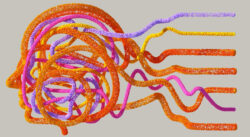
By late winter, many women are wearing more than just layers of clothing: we have accumulated layers of stress. Throughout Winter, stress builds gradually—through shorter days, too little physical activity, reduced sunlight (which affects circadian rhythms and mood) holiday season pressures, and indoor living.
Dissolving Stress to Awaken Your Body’s Intelligence
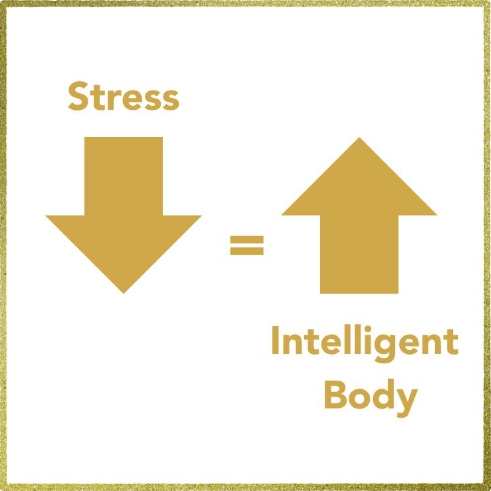
What does the body’s intelligence do? First we should acknowledge that the body has inherent “creative intelligence”: this is obvious in the ever continuing growth of one’s body from a fetus to a teenager to an adult. We don’t direct the body to do so, but it naturally creates. Examples include new cells, new antibodies, and new neural connections.
The body also already has what is called natural “regulatory intelligence” which is illustrated by all its functions.
Articles
Mothers

We tend to describe mothers in terms like nurturing, supportive, patient, and giving. It’s all true, but it’s also incomplete. In today’s world, which increasingly runs on speed, distraction, and fragmentation, mothers do something else that is essential: they act as stabilizing forces in a culture that has largely forgotten how to settle itself.
Our modern style of living is filled with constant notifications, ever-changing norms, highly demanding schedules, and ambient anxiety. Most systems around us are designed to stimulate, not soothe. Yet within homes, mothers quietly regulate the emotional climate. They absorb turbulence, translate it, soften it, and return it to the family in a more manageable form—not always consistently or perfectly, but enough that life holds together. In this way, mothers are caregivers and also shock absorbers for the nervous system of society.
Today’s mothers are often needed to perform this stabilizing function while also participating fully in the workforce, navigating digital overload, and managing a level of cognitive input that no human nervous system can handle indefinitely. The result is not just fatigue—it’s a gradual erosion of the very inner strength and stability that their role depends on.
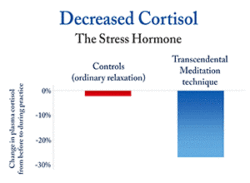
This is where the Transcendental Meditation technique enters the picture in a practical way. If mothers are acting as stabilizers, then their own internal stability becomes the linchpin. TM is a systematic way for the mind and body to settle deeply—beyond ordinary rest—allowing accumulated stress to dissolve. The effect is that mothers gain and regain access to a source and baseline of calm that modern life tends to strip away. From that profound source within themselves, mothers’ natural capacity to organize, nurture, and respond intelligently is expressed more effortlessly.
With the decrease of stress in their own nervous systems and the restored calm that TM provides, mothers are an influence of harmony. Because emotional states are contagious, influencing everyone around—especially within families—an increase in coherence or calm tends to ripple outward. Children become less reactive, communication smooths out, and the home environment subtly shifts.
Supporting mothers isn’t just a matter of appreciation—it’s a societal priority. Because moms are helping to regulate the human experience at its most intimate level, then giving them a tool to maintain their own equilibrium is one of the most practical contributions we can make to the future.
This is a re-framing of how society should depict the role of mothers. They are, moment by moment, supporting and evolving the nervous system of the world. A peaceful world begins with peaceful moms.
Teachers

Students and teachers enjoy an intimate and unique relationship. The student wants knowledge of life, and the teacher has her area of expertise to bestow—language, history, mathematics, physics, chemistry, geography. The student who wants to learn always has a respectful and appreciative regard for the teacher, which draws more knowledge from the teacher spontaneously.
The teacher is brimming with information, so with proper receptivity from her class, her knowledge simply and naturally overflows. However, if the teacher is saying something and the student is not innocent and receptive, always formulating questions and expressing doubts, then the student is putting up resistance to the flow of knowledge. The teacher must be alert enough to distinguish between the tone of the question and the question itself, so she can answer directly to the question. She must find ways to clarify from different angles. In this situation, the teacher must shine in a different way: she must be able to give knowledge in a nurturing way to dissolve doubt and resistance. She must be aware enough to know the difference between a child’s challenge born of a desire to learn and a child’s challenge born of stress.
The relationship between teacher and student should be a relationship of freedom. When the teacher enrolls a student she gives her the freedom to ask anything. They engage in a contract that says: I will teach and I will learn. And this is what every teacher wants. The desire of every teacher is to see her student surpass her in knowledge. Unfortunately, in our modern world, there are obstacles to the fulfillment of education.
Fortunately, research published on the Transcendental Meditation program in schools shows TM significantly decreases classroom obstacles: The TM technique reduces stress, while increasing students’ self-esteem, calm, learning ability, grade point average, and coping ability. It reduces burnout, depression, and perceived stress in teachers. TM settles the environment and increases harmony in the classroom. These improvements restores freedom to teach and learn.
The flow of knowledge from the heart of the teacher to the heart of the student is joyous. The teacher feels fulfilled by the awakening of the joy of knowledge in her student.
Nurses

There are over four million registered nurses in the United States.
Nurses make up the largest segment of the healthcare workforce. Nurses provide the majority of hands-on care in hospitals, clinics, schools, and homes. Nurse practitioners can diagnose, treat, and prescribe medication, often serving as primary care providers especially in rural areas where doctors are scarce. Patients typically spend more time with nurses than with any other healthcare professional.
Studies show that higher nurse-to-patient ratios are linked to lower mortality rates, fewer medical errors and shorter hospital stays. Preventative care and patient education by nurses help reduce hospital admissions and re-admissions. Nursing is consistently ranked the most trusted profession in reputable surveys.
Modern physicians practice highly specialized medicine, ie pulmonology, cardiology, neurology, oncology, endocrinology and so on—nurses, however, treat the whole patient.
Because of the incessant demands upon them, witnessed to an extraordinarily high degree during the recent pandemic, nursing professionals are experiencing a mental health crisis. More than 65 percent of nurses report experiencing burnout. Studies indicate high rates of exhaustion, emotional exhaustion, anxiety, and depression. These translate into a higher frequency of substance abuse, ill health, problems at home, absenteeism, errors in job performance, and a higher drop-out rate in the profession.
Enter Transcendental Meditation: The TM technique was chosen by the American Nurses Association\California as one of five “best fit” solutions for nurses’ mental health and well-being. Over 435 independent, peer-reviewed studies verify that the technique relieves stress, promotes inner peace and increases focus and happiness. Research conducted specifically with nurses shows clear statistical evidence that the TM technique decreases anxiety, PTSD, and burnout while increasing compassion and resilience. Two quantitative studies have been published in leading nursing journals, and presented at the ANCC Magnet, Mayo Clinic, Florida Association of Nurse Executives and the American Holistic Nurses Association conferences.
Those who dream of being a nurse and train diligently for it, who wish to help people and care for others, are of immeasurable value to our society. Nurses are the steady heart and hand within the chaos and complications of healthcare.
What women say

Mother: “I would say if you do only one thing for yourself—let it be TM. It’s the single most effective and efficient thing you can do to combat stress and fatigue so you can be present to fully enjoy your life and your family.”
Teacher: “Less stressed and more energetic within a few days (after learning TM).”
Nurse: “I know that because of TM I was really able to reduce the anxiety and provide myself with compassion and the space to heal and rewire my brain.”
Editor’s note: We’d love to hear your comments on the benefits you’ve received from the TM practice. And, with your permission, we’ll publish them here for other women to enjoy. Send your comment to info@tm-women.org