An Interview of Dr. Amy Knoblock-Hahn: Advancing Health Through Nutrition and Lifestyle
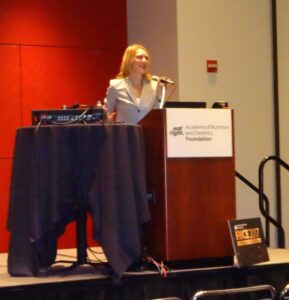
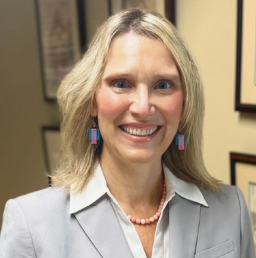
Dr. Amy Knoblock-Hahn, PhD, MPH, MS, RDN, LD is a nationally recognized nutrition scientist, registered dietitian, educator, and public health leader whose work integrates nutrition, technology, behavioral science, and food systems to improve health outcomes. A former faculty member at Saint Louis University and Fontbonne University, and currently a registered dietitian with the VA St. Louis Health Care System, she has conducted pioneering research in obesity prevention, consumer health technologies, food security, sustainable nutrition, and health behavior change. She is currently serving as a public health officer at the St. Louis VA Hospital.
Dr. Knoblock-Hahn has authored numerous peer-reviewed publications, contributed to national nutrition policy initiatives, and received recognition from the Academy of Nutrition and Dietetics for excellence in outcomes research. Her work is dedicated to advancing evidence-based nutrition solutions that improve the health of individuals and communities. Amy is a mother and wife, and in addition to her academic and research career, she is active in civic and nonprofit leadership.
Amy, thank you so much for taking time from your busy schedule to have this conversation with us.
1- Your focus combines nutrition science, public health, technology, and behavioral science—all with the goal of helping people live healthier lives. What first drew you to this interdisciplinary approach, and what has kept you passionate about it over the years?
My interest in health started at a very young age. I can’t pin it on a specific experience, but I was always fascinated to learn about the role of foods in health and disease. I quit eating red meat when I was 11 because I decided it wasn’t healthy. Both of my parents grew up on farms, so they weren’t too excited about this decision, but I stuck to it and haven’t had red meat in more than 40 years. Today I try to consume a primarily plant-based diet, but I do include small amounts of dairy and fish.
Living a life free of chronic disease is gratifying….really, there is nothing more motivating than how good it feels to be healthy.
2- You’ve devoted much of your career to preventing obesity, improving food security, and helping people make lasting healthy choices. What are some of the biggest barriers people face in creating healthy lifestyles today, and what gives you hope that those barriers can be overcome?
Physical and social environments can serve as a primary barrier or facilitator for a healthy lifestyle. For example, your immediate food environment—that is, what you keep in your pantry and fridge, is one environment that individuals have the most control of. On the other hand, access to healthy food (such as proximity of healthy food stores or farmer’s markets to your home, number of fast-food restaurants, walkable space, noise, pollution, etc. are environmental factors that influence your ability to live a healthy lifestyle, but perhaps less under your control.
The importance of environmental influences on health has long been recognized in the field of public health. A variety of successful interventions related to transportation, nutrition and food systems, and healthy workplace environments can be found in the literature and serve as a great model for what communities can do to improve their health behavior choices.
3- One of the hallmarks of your work is recognizing that lasting health isn’t just about information—it’s about behavior change. Why is unfolding the potential of the human mind and reducing stress so important when we’re trying to help people adopt healthier habits?
While some stress is normal and even healthy, people who live in chronic stress are at a much higher risk of a variety of short-term and long-term illness. People in chronic stress have elevated levels of cortisol and are constantly in “fight or flight” mode. Over time, this causes wear and tear on the body and can show up as heart disease or other inflammatory illnesses as well as a decreased immune system. Additionally, people who experience chronic stress may turn to harmful behaviors such as drugs, smoking, or alcohol to help them feel better. These are temporary solutions that cause great harm, so we see a bit of a snowball effect as it relates to stress related illness. Finding healthy ways to relieve stress such as Transcendental Meditation, good sleep hygiene, and regular physical activity can set a person up for other healthy lifestyle behavior choices.
4- Alongside your demanding career in research, teaching, and public health leadership, you’re also a wife and mother. Many women struggle to balance professional responsibilities with family life. Has Transcendental Meditation helped you maintain that balance over the years?
Like healthy eating and exercise, TM has become a habit. I can’t imagine starting my day without TM. However, it is certainly fair to say that I have had seasons in my life that were extremely busy and hectic. So I do the best that I can. Some days, this meant I only got in one meditation rather than two. It’s better to follow the TM twice a day prescription, however, when that was impossible, I discovered that consistency rather than perfection served me well. For other women struggling to be “the perfect” mother, spouse, and/or employee, I really encourage the “I’m doing the best that I can” approach rather than the “well I don’t have enough time to do it all so I’m not going to do any of it” when it comes to healthy lifestyle behaviors, including TM. And yes, TM has definitely helped me maintain a healthy balance and approach to life in general.
5- What inspired you to learn the TM technique, and what benefits did you begin to notice after making it part of your daily routine?
It turns out I was dating someone who practiced TM, and that sparked my interest and curiosity to learn more about TM approximately 30 years ago. That man has been my husband for 26 years! It’s a wonderful practice to share with someone you love—that in itself is a great benefit—to have a significant other who is on the same spiritual page as you.
Although I can’t pinpoint any immediate benefits (honestly, it’s hard for me to remember that far back), as I reflect on my general life experience as it relates to my marriage, my family, and my career, I firmly believe that practicing TM has given me great support and nourishment from nature.
6- Your professional work is rooted in evidence-based science. As both a scientist and a meditator, how has your personal experience and your observation of the published research on the Transcendental Meditation program influenced your understanding of the relationship between TM and stress, behavior, and overall health?
If I were only wearing my scientist hat, my observation of the research is that TM can produce benefits to individuals with high blood pressure and it is a very promising technique for stress reduction, especially for populations who face high levels of stress in their daily lives (i.e., first responders, Veterans, etc.).
My positive personal experience combined with my knowledge of the literature is that TM is a valuable technique not only for stress reduction, but as a way to start your day and as a way of getting in touch with your inner self.
Finally, I would say that even if we can’t definitively prove that TM has an enormous health benefit, there is nothing that is harmful about the practice and it does not require a change in one’s religiosity, which I know is something feared by some. So, as an evidence-based scientist as well as clinician, if I wasn’t already practicing TM and I had a patient or client ask me for guidance or a recommendation on starting the TM program, I would be very encouraging that this is a risk-free practice that may provide great tangible and intangible benefits.
7- Do you believe the Transcendental Meditation program deserves a place alongside education, healthy eating and other evidence-based approaches to living well?
Yes, without a doubt!
8- Looking at the whole picture of women’s health from your perspective, are there any other comments or advice you’d like to share?
I may be biased as a registered dietitian, but 40% of chronic diseases can be attributed to poor diet. Most people can always fit more veggies in their diet! Physical activity is also key-our bodies are meant to move. Most women focus too heavily on cardio—cardio is great, but all women need to incorporate strength training for healthy aging.
Contact a Nearby Certified TM Teacher
About the Author
Janet Hoffman is the executive director of TM for Women Professionals, a division of TM for Women in the USA
More Posts by Janet
- The Story of Hurricane Helene and the Relief From Within Project: An Interview with Jeanne Ball
- Beauty and Joy, Even When the World is Too Much
- The Extraordinary Pianist Hiroko Sasaki: Silence in Performance
- Our Inner Advantage in an Unsettling World
- This Summer, Let TM for Women be Your Travel Guide to the Ultimate Stay-cation