April 2026
This month, our mini magazine focuses on demystifying the practice of the Transcendental Meditation technique, highlighting scientifically verified benefits for women, and addressing common misconceptions.
- Last month’s blog written by women for women
- Articles:
- The no-effort advantage of the TM technique
- What to expect during the TM course of instruction
- TM Health and wellness benefits especially relevant to women
- Q&A: Addressing common questions, concerns, and misunderstandings
- What women say: “I was quite surprised…”
Blog posts
Have you had a few minutes to read our March blog posts? If you haven’t, the links are below. You can also visit our blog homepage to use our search feature for a great range of interesting topics, including Health Care or Disease Care from 2013 and Have You Seen My Memory Somewhere from 2017.
Maharishi Speaks on Emotion and Intellect December 11, 1971

Audience question:
“I have some questions concerning the relationship between the intellect and the emotions. It seems like there is more talk about the specifics of how the intellect works; I was wondering how the emotions work. Is it true that all emotions are more subtle than all intellectual activity, no matter what the quality of the emotion?”
Empty Nest, Full Life: The Advantage Gained from Transcendental Meditation

When children leave home and parents face an “empty nest,” a surprising mix of emotions and even physical symptoms can arise. For many women, both at-home moms and moms with demanding careers, it’s not just a shift in lifestyle, but a profound transition.
I am a psychotherapist and the mother of two grown sons. I’ve lived through this transition personally and have accompanied many friends through it. It is a significant stage of life—one that can be rewarding, yet also unexpectedly taxing. For me, understanding what was unfolding, along with the profound relief I experienced through practicing the Transcendental Meditation technique, made all the difference.
Articles
The No-Effort Advantage of the TM Technique
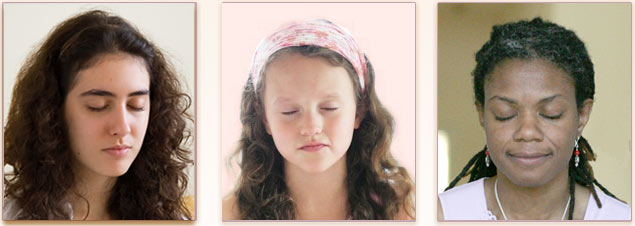
The no-effort advantage of Transcendental Meditation is that by not trying to control the mind, the mind can naturally settle to subtler levels of thought and can experience silent awareness, a state of restful alertness, which is characterized by expanded consciousness and deep physiological rest.
Different meditation techniques engage the mind in different ways and produce different effects on the mind, body and behavior. Any technique that involves visualization, contemplation, concentration, trying in some way—or any effort to direct the mind or even to observe or monitor mental activity—directs our natural silent undirected awareness into activity. When the mind’s own inner unbounded awareness is bound up in various thoughts, it’s this mental activity that prevents the mind from settling to quieter levels.
Effort tends to keep the mind active on the surface; effortlessness allows it to sink inward. When a diver wants to experience the smoothest dive, she simply takes the best angle and lets go, allowing gravity to pull her into water. In the same way, the components of the TM technique provide the smoothest angle for the mind’s attention to follow inward and effortlessness does the rest.
In fact, effortlessness is the key to TM’s effectiveness. This is why, for example, even hyperactive ten year old children can comfortably and successfully do the TM technique. Scientific researchers validated that TM is effortless in a study that was published in 2016 in Brain and Cognition.
Effective meditation induces a state of unity of your mind with the deep levels of your innermost self. Actually, that is what the word “yoga” means—unity. Unlike other meditations that involve effort or perpetual thinking, TM allows you to spontaneously transcend, (thus the name Transcendental Meditation)—to go beyond thoughts, deep within, to the state of restful alertness or pure consciousness.
Often women comment that that found it frustrating when they tried other kinds of meditation. TM is simple, automatic, and natural. It works every time. Scientific indicators of the effortlessness of the technique and the resultant transcending are markers such as:
- reduced oxygen consumption
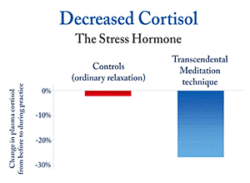
- lower cortisol
- increased EEG coherence
What to Expect During the TM Course of Instruction
The transcendental meditation course is taught in a series of seven steps.

Three-step prerequisite
The first three steps are free of charge and are prerequisites for the course of instruction but do not obligate you to register for the course.
Whether you take the first three steps a few days before or months before the course of instruction is not important, however we recommend not leaving enough time between the prerequisites and the course to forget what you have learned.
The first step is an introductory presentation which explains the benefits of the Transcendental Meditation technique and how they result from the principles that underlying the technique itself. We discuss some of the many hundreds of scientific research studies that have verified these benefits and have been published in highly respected scientific journals around the world. We explain the course of instruction and the requirements one must meet to take the course, and we answer your questions. You can also watch the introductory presentation here and then connect with a teacher for further information.
Step two might be held immediately after step one or could be at a separate time on a separate day. Step two is another presentation by the teacher which will explain the mechanics of the TM technique, what makes it effortless, and how it is different from other types of meditation techniques. You will learn about the origins of the technique and be able to ask questions. We will review the course of instruction and its requirements and then you will be able to take step three.
Step three, commonly held right at the end of the second lecture, is a short personal interview with the TM teacher in which you can ask personal questions. The teacher will also have some questions for you. Then you can schedule an appointment for the course of instruction: steps four through seven.
The actual course of instruction must be held on four consecutive days at a time each day or evening that is convenient for both you and the teacher:
On the first day of the course, the instruction must be private as you will be taught basics that are uniquely personal to you. In that meeting, you will have your first experience of TM and a chance to do it on your own. Afterward, you will receive some more instructions from the teacher in preparation for your doing it on your own at home. Having gotten this first taste of the TM technique, you will be able to meditate on your own later that afternoon and again the next morning. In fact, beginning on that first day, you will be meditating regularly morning and afternoon (or early evening).
On the second day of your four part course, you will have had a few meditations under your belt and will probably have questions based on your experience. The teacher will answer your questions, give further instructions, and make sure you are doing it effortlessly—which is key to its benefits. This meeting and the following two meetings can be held in a group, though you will always have access to the teacher to ask anything personal. After this class, you will meditate on your own again twice a day before your third meeting of the course, on the very next day.
By the third day of your course, you will have gained some familiarity with the experience of quieter levels of functioning in the mind and body. Based on your growing familiarity, the teacher will explain the mechanics of the technique in light of your own experience. She will explain how stress is dissolved and will clarify the role of thoughts during TM. She will again check to make sure you are doing it mechanically, properly, and effortlessly, and will again answer your questions. Then you are prepared to meditate on your own again before your meeting on the next day.

By the fourth, final, day of instruction, you are likely to have started noticing some results from the deep rest and increased clarity achieved during the TM technique. These benefits differ from person to person and can be as diverse as having a greater feeling of happiness to some greater harmony in relationships to smoking less or sleeping better, and so on. It is very personal growth based on your own nervous system. At this time your teacher will be able to explain the long range benefits of TM and development of consciousness. She will review the mechanics of the technique from day three and again check the technique and again answer your questions. Before the meeting is over, the teacher will inform you of some of the ongoing program activities that are available to you throughout the world as someone who has learned the TM technique properly.
Many teachers enhance their TM course presentations with videos or audios of Maharishi, the founder of the TM program, to elucidate points during the course. After the course is complete, you will have access to certified TM teachers for verification and validation of your practice as part of your free lifetime follow up program.
Still have questions about the course? Connect with a teacher near you to find out more.
TM Benefits Especially Relevant to Women

Published research on the TM program has identified many benefits particularly relevant to women, ranging from cardiovascular to emotional, including:
Physical & Metabolic Health
- Cardiometabolic Risk Reduction: A 2025 study in the Journal of Women’s Health found that TM significantly improved blood sugar control, insulin function, and healthy cholesterol (HDL) levels in Black women, a population at higher risk for heart disease.
- Heart Health & Hypertension: Research shows the TM practice can reduce high blood pressure, cholesterol, and insulin resistance. Because heart disease is the leading cause of death among women, these improvements are critical for long-term health.
- Weight Management: Participants in TM clinical trials have shown reduced overweight and obesity markers compared to those receiving standard health education.
- Immune Function: Regular practice of the TM technique is associated with increased activity of natural killer cells, which are vital for the body’s defense against pathogens.
Emotional and Psychological Well-being
- Stress and Burnout Relief: Clinical trials involving healthcare workers (predominantly women) demonstrated that the TM program significantly reduces chronic stress and emotional exhaustion, even when acute distress levels remain high.
- Anxiety: Meta-analyses have shown TM to be roughly twice as effective at reducing trait anxiety compared to other relaxation or meditation techniques.
- Depression: Practice of the TM technique is associated with decreased symptoms of depression and improved overall psychological well-being.
- Activating Your “Inner GPS”: The experience of transcending, or settling the mind, clears fatigue, allowing women to better access their intuition and make clearer decisions.
- PTSD Recovery: The TM program has been validated as a safe and effective approach for reducing symptoms of post-traumatic stress disorder, specifically lowering anxiety and emotional distress.
- Restorative Sleep: Studies indicate improved sleep quality and duration for women practicing TM, helping to combat the insomnia and sleep disturbances common in fast-paced lifestyles and in aging.
Hormonal & Aging Benefits
- Hormonal Balance: Research suggests TM helps regulate the hypothalamic-pituitary-adrenal axis, which may alleviate symptoms related to hormonal fluctuations, such as menstrual irregularities and mood disturbances.
- Menopause Support: Learning the TM technique before or during midlife transitions can help dissolve the emotional stress that triggers, worsens, or accompanies menopausal symptoms, such as hot flashes and mood swings.
- Biological Anti-Aging: Longitudinal studies have found that long-term TM practitioners can have a biological age significantly younger than their chronological age—averaging up to 12 years younger in some reports.
Q and A

Q: Common Questions About the Transcendental Meditation Program
The linked article from 2019 provides information that addresses commonly asked questions, concerns, and misunderstandings:
What is Transcendental Meditation (TM)?
Can anyone do it?
Is meditating your style?
Can you learn it from a book, etc?
How much time do I need to spend meditating once I learn it? Can I do it on my own?
Who teaches TM?
How long is the course and what does it cost?
Once I learn, can I teach my friends and family?
Best way to start checking it out?
Click here to read the article.
What women say

Learning Transcendental Meditation is easy and the practice itself is surprisingly effortless and relaxing. This is especially noticeable in contrast to meditation methods that use concentration. Here is a typical sample of what women say after completing their instruction:
“I found learning the TM method very easy and natural. The first few times I practiced, it was also overwhelming to me, because it has only been in very rare situations in my life that I have felt relaxed. I was quite surprised about how I felt after practicing TM at first because, ordinarily, it takes a long time for me to relax. For example, going on a holiday for two weeks, I would finally feel relaxed in the last three days, and then go back to work… and back to being stressed. But during and after practicing TM, I immediately felt calm in my body. My heart wasn’t racing, and my mind was also suddenly very quiet.” – 32 year old woman, five weeks after learning the TM technique.
Editor’s note: We’d love to hear your comments on the benefits you’ve received from the TM practice. And, with your permission, we’ll publish them here for other women to enjoy. Send your comment to info@tm-women.org