September 2026
September brings a collective shift in speed and focus as many of us transition from summer fluidity into a structured routine. At this time, while most self-help programs advocate for higher motivation and endless goal-setting, we invite you to look at the underlying mechanics of performance: the deeper the rest and the more potential unfolded, the more powerful the activity.
In this issue, we examine how, through the TM technique, effortless diving into inner silence provides the precise mental and physical resetting required to meet autumn’s demands. Read on to explore practical insights on cognitive clarity, the science of neuro-rest, and the subtle mechanics of sustainable energy.
- Last month’s blog written by women for women
- Articles:
- The neuroscience of effortlessness
- Your body and dynamic performance
- The art of performing action with the least amount of energy
- Q&A: What’s the best way to handle a problem?
- What Women Say: “for me, it is all about feeling rested…”
Blog posts
Have you had a few minutes to read our August blog posts? If you haven’t, the links are below. You can also visit our blog homepage at any time to use our search feature for topics as diverse as Relationship of Transcendental Meditation and Yoga: A 1965 Interview with Maharishi from 2024 and Meditation for Depression from 2023.
Our Inner Advantage in an Unsettling World

In our modern world, just being aware of what is happening around us can diminish our sense of well-being. So just for a change, a couple of times a day, look within instead.
In the mind’s relentless search for security and happiness, our individual leanings find endless directions to pursue—travel, wealth, entertainment, purchases, achievements, relationships, better news. The promise of something new, something different, something better is always alluring to a mind that is not established in peace.
The Extraordinary Pianist Hiroko Sasaki: Silence in Performance

One thing I would say is that for me personally, for my art—and, I believe, for a lot of artists—I need silence within. We need to find that space inside of us, because that silence is where everything starts, where things are born from. I know when I’m playing well, I have perspective, and my sensory awareness is vast.
Articles
The Neuroscience of Effortlessness

Optimizing your mental potential doesn’t require a mental fitness boot camp. It doesn’t require concentrated focus, emotional monitoring, or behavioral control. Rather than forcing the mind into compliance, published research indicates that the mechanics of neurological recovery can rely solely on effortlessness through the Transcendental Meditation technique.
Neuroimaging and electro-encephalogram (EEG) studies reveal that the Transcendental Meditation technique functions through automatic self-transcending, a natural effortless mechanical shift that bypasses the tiring labor of concentration. With the TM technique, the nervous system enters what researchers categorize as “restful alertness.” Restful alertness is completely different than the rest during sleep. For example, during sleep, blood flow is lower throughout the brain; during TM, blood flow is higher in the front of the brain. During sleep, we see delta EEG, which is the marker of the brain recovering from the day’s activity; during TM we see alpha activity, which is the marker of the brain being restful and alert.
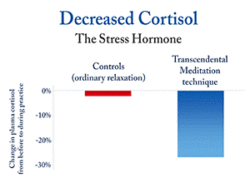
During TM, basal skin conductance decreases, indicating the sympathetic nervous system is more settled. At this same time, plasma cortisol levels—the biochemical marker of sympathetic activity steeply drops. Together, these two markers show a important effect of TM practice. The sympathetic nervous system’s activity is higher when you are worried, anxious, fearful and under pressure; it is more quiet during TM practice and remains low after meditation practice. Reduced sympathetic activity explains decreases in PTSD, anxiety, perceived stress and reduced stress reactivity with regular TM practice.
At the cortical level, this effortless state triggers a unique neurological signature: intense alpha-1 brainwave synchronization. EEG data demonstrates that within minutes of beginning the TM technique, high-amplitude alpha waves appear in the prefrontal cortex and rapidly spread across both hemispheres. This phenomenon, known as interhemispheric coherence, reflects an unprecedented level of global coordination between different processing centers of the brain.
In contrast to wellness tasks that require active thought—which fragments neural networks—the automatic nature of transcending in this practice unifies neural networks, creating a clean, synchronized electrical baseline across the entire cerebral landscape.
Crucially, functional neuroimaging confirms that this practice uniquely activates the Default Mode Network (DMN). Often referred to as the brain’s “natural ground state,” the DMN is typically suppressed during demanding external tasks and active concentration. Studies utilizing exact Low-Resolution Electromagnetic Tomography reveal that alpha-1 cortical sources during the TM technique directly overlap with major hubs of the DMN. TM strengthens this network through effortless rest rather than suppressing it through forced mindfulness.
The result is a resilient cognitive baseline that keeps the mind anchored, orderly, and clear, even when stepping into Autumn’s high-demand routine.
“In this quiet state both the mind and the nervous system are alertly poised like the arrow drawn fully back upon the bow; they are without activity, but the entire system is alert in stillness. At the same time all the mechanisms of the body are acutely balanced and steady. It is this restful alertness of the nervous system which represents its most healthy state and is the basis of all energy and action.” — Maharishi, Science of Being, pg 194
Your Body and Dynamic Performance

During the Transcendental Meditation technique, the body enters a state of deep physiological rest while the mind remains awake. Research has documented reductions in metabolic activity, respiration, sympathetic nervous-system activity and other physiological measures of arousal. The body is deeply rested but “alert”—with higher immune functioning and repaired feedback loops. This explains why people can emerge from TM feeling rested, refreshed and ready for dynamic activity.
Ordinary physical rest
When you sit down or lie down, you reduce your body’s physical demands. Your muscles aren’t working as hard, your heart rate may come down, and you stop expending energy through movement. But your nervous system may still be quite active. You can be lying on a couch while thinking continuously, maybe worrying or planning, remembering conversations, or feeling emotional. So physical inactivity does not necessarily equal deep physiological rest.
Deeper, higher quality rest
Deep rest involves a broader reduction in physiological activity and, particularly, a reduction in the body’s stress/arousal response.
The nervous system is the body’s main control and communication network. It uses tiny cells called neurons to send electrical and chemical messages back and forth between the brain, spinal cord, and all other parts of the body. It controls your thoughts, feelings, movements, senses, and automatic functions like breathing, digestion and heartbeat. It has two parts:
The Central Nervous System is made of the brain and the spinal cord. It acts as the main command center that processes all incoming and outgoing information. The Peripheral Nervous System is made of all the nerves that branch out from the spinal cord to the rest of the body. It connects the CNS to organs, limbs, and skin.
When the nervous system settles down, the body can devote more of its resources to maintenance and restoration rather than continual readiness for action.
Physical rest can simply mean not being engaged in doing anything. But the Transcendental Meditation program offers something more: the physiological processes during sleep are completely different than the signature “restful alertness” one experiences during TM. Restful alertness resets sympathetic activation. Resetting sympathetic activation means calming your body’s “fight-or-flight” system to lower stress hormones, reduce a fast heart rate, and shift back into a relaxed, healing state. That distinction helps explain why 20 minutes of Transcendental Meditation can leave someone feeling more refreshed than after other forms of rest.
TM, a unique state of rest, and energy
Energy is fuel but it doesn’t get used up in the sense that gasoline gets used up from driving. Your body is continually producing energy, regulating it, allocating it, and determining how much of it is available for different functions. Chronic physiological or mental arousal can consume resources and keep the body in a state of expenditure.
The unique state of restful alertness during the TM practice reduces that expenditure and supports restoration, a subjective sense of increased energy, and a greater capacity for activity. This differs from stimulation, as from caffeine, excitement, adrenaline, or even from some intense exercise, all of which can temporarily increase alertness—but doesn’t necessarily indicate restoration.
During the Transcendental Meditation technique, one isn’t simply “resting.” The body experiences a state of deep rest while the mind remains awake. That combination is what makes the concept interesting: deep physiological rest without mentally napping or sleeping. The relationship between the mind and body allows the TM technique to reduce physiological demands and support recovery, which can translate into greater capacity and subjective energy, making sustained, focused dynamic activity possible.
This is why the quality of rest matters. Being physically still while the nervous system remains highly activated isn’t necessarily the same as deep physiological recovery. True restorative rest involves a reduction in the body’s demand for action, a shift toward the body’s restorative processes, and ideally, a settled but alert state of awareness.
Highlights of published research on this topic (CLICK TO READ RESEARCH)
The Art of Performing an Action With the Least Amount of Energy
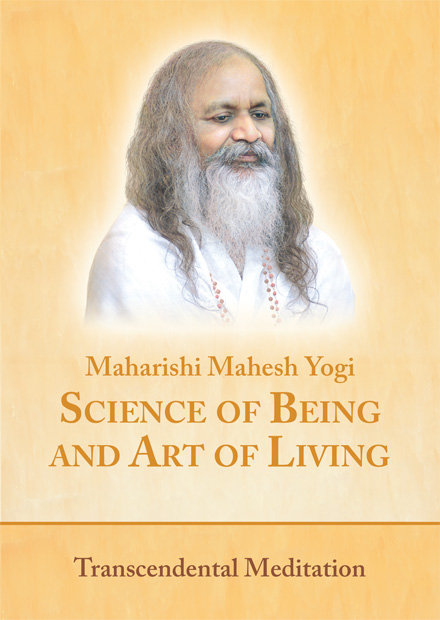
Maharishi: “In order to perform an action with the least amount of energy, it is first necessary that the thought of the action be powerful. A weak thought will necessitate a great amount of exertion to accomplish the action, whereas a powerful thought will easily find its way to materialization. A highly developed power of thought…comes through the process of Transcendental Meditation. So, in order to be successful in the field of action, it is first necessary that the power of thought be great. For this, one must regularly practice Transcendental Meditation.
The surroundings and circumstances should also be favorable for its performance. That is, the surrounding should also feel the need of the action and hope to receive something useful. The surrounding atmosphere then becomes favorable for the performance of an action and its performance becomes easy and harmonious.
The doer should also be powerful and energetic. In the part on being the plane of cosmic law, we have seen that the practice of Transcendental Meditation takes the mind to the source of all creation, which is the field of limitless life energy. The conscious mind coming directly in tune with the field of limitless life energy gain such a great amount of vitality that any action can be easily handled and performed quickly, without strain, and with great success. If a man is not energetic when he performs an action, he lacks confidence in what he has done and at every moment of the action he is afraid to step forward.”
— from the Science of Being and Art of Living by Maharishi Mahesh Yogi
Q and A
Q: What’s the best way to handle a problem?

“…bring the solution from the basis of the problem. There is a problem. And there is a tree of problem – very big, huge extending in all directions, a tree of problem. There is a problem, and a tree of problem seems to be overtaking all directions. The suggestion is: find the root of the problem and find a solution at the root. Because at the root the solution, the problem, the problem at it’s root is in a very, very fine structure. The structure of problem in the manifested area is very big and huge and all encompassing; but at it’s root it is small, it can be handled easily.
The tree is drying out, all the leaves, branches, they are drying out. The suggestion is here: find the root of the tree, strengthen the root, water the root. And from there bring nourishment to the drying leaves and branches and all. Tackle the problem at its root because it is easy to handle. And easily handling the root of the problem, the entire problem can be erased. The entire problem can be erased from its root.”.
— Maharishi, August 15, 1970
What women say

“The TM technique rejuvenates and energizes my whole physiology, reduces my stress and leaves me with an ongoing feeling of well-being. The challenges of daily life are always there for me, yet what better way to face them then from a seat of pure personal joy. For me it is all about feeling rested and mentally clear all day long. I wish everyone would learn this technique. I am so grateful to have access to this knowledge that has transformed my life.” — Joanne Hollander, Montreal
Editor’s note: We’d love to hear your comments on the benefits you’ve received from the TM practice. And, with your permission, we’ll publish them here for other women to enjoy. Send your comment to info@tm-women.org