March 2026
This month, we travel to Canada, India and Uganda, highlighting programs in which the practice of Transcendental Meditation is transforming the lives of women and girls.
- Last month’s blog written by women for women
- Articles: TM Abroad
- New study published on TM and women in Uganda in Healthcare for Women International
- Canada’s Victoria School for Ideal Education
- In India: fiftieth anniversary of the world’s first women’s TM organization
- Q&A: How does TM impact chronic stress, rather than just temporary stress?
- What women say: “…super-empowering for me” – Cameron Diaz
Blog posts
Have you had a few minutes to read our February blog posts? If you haven’t, the links are below. You can also visit our blog homepage to use our search feature for a great range of interesting topics.
New Research Affirms the Benefits of Transcendental Meditation

Four research studies published in respected, peer-reviewed scientific journals in 2025 and 2026 add to the already extensive body of objectively verified evidence demonstrating the benefits of the Transcendental Meditation program.
A Simple Guide to Healthy Happy Mothers and Babies: An Interview with Author Margaret Mullins
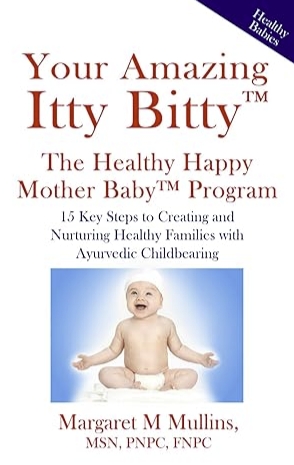
Margaret Mullins MSN, PNPC, FNPC is the longtime steward of the Healthy Happy Mother & Baby Program and the author of a new book by that name. Drawing on decades of experience in both Western obstetrics and Maharishi AyurVeda, Margeret has played a central role in preserving—and responsibly sharing—this specialized body of maternity care for modern families and practitioners.
Q: Your Amazing Itty Bitty is the publisher of your new book, The Healthy Happy Mother & Baby Program. What inspired you to write this book now?
Articles
New Research on TM and Ugandan Women During Pandemic: “Now we are fine.”
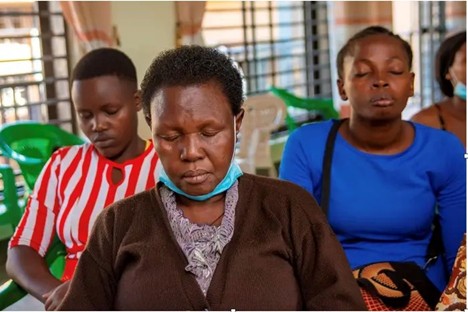
A peer reviewed, randomized controlled study was published on February 5th, 2026 in Health Care for Women International. This study with 199 women living in poverty in the city slums of Uganda was conducted following two extended country-wide Covid pandemic lockdowns.
Of the 199 participants, 40% had completed only primary school or lower, and only 53% were able to read and write. Most of the women (87%) were mothers, and 40% were single mothers. After baseline testing, participants were randomly assigned to either learn and practice the TM technique or to a waiting-list control group. Participants learned TM over five consecutive days and then practiced at home for 20 minutes twice a day. Post testing took place after three months.
Researchers found that the Transcendental Meditation technique significantly reduced perceived stress, anger, and fatigue; increased self-efficacy; and improved sleep quality. The meditators’ mental and physical health was improved as was their ability to cope during the pandemic crisis. Relationships with spouses, children and neighbors improved.
Comments by Observers, Researchers and Participants
“The Covid lockdowns in Uganda, which resulted in food shortages, lack of employment, and increased domestic violence, exacerbated the already challenging circumstances faced by these women,” said lead author Leslee Goldstein, PhD. “Leaders at the Amazing Women Community Organization serving them reached out to African Women and Girls Organization (AWAGO), the TM women’s organization in Uganda, for their programs to help these women reduce stress, which exponentially increased during the lockdowns.”
Describing the situation and explaining why the implementation of the TM program was requested, Amazing Women Executive Member, Teopista Nambaziira explained, “Women were losing hope, thinking there was no future for themselves. They were so fatigued, so stressed, they couldn’t sleep well. We decided to see if TM could help them.”
Comments by participants included:
“TM has helped me improve on my health in the way that I no longer fall sick like before.”
“I now have inner peace and self-control.”
”I am more resilient.”
“I feel confident with new situations.”
“We are now friendly and communicate so well, (my children) even tell me I am the best mother now since I learned TM.”
“I used to fight with the neighbors, but now we are fine.”
Fausta Zadoch, a local church leader and counselor in the community, reported “TM has changed these women and girls. They are now stress free, and everything has improved spiritually, financially, and physically. We are grateful for this beautiful program.”
Amazing Women Executive Member Teopista Nambaziira reported: “At first women didn’t think TM would help them, and they told TM teachers ‘just give us money.’ After learning TM everything changed. They could not believe how easy TM is and that they could experience such peace inside themselves…. Now they take everything easier and at the end of the day, they say ‘I am OK.'”
Read the study: Health Care for Women International, 1-24.
Canada’s Victoria School for Ideal Education

The Victoria School for Ideal Education in Victoria, B.C., Canada, is redefining what it means to educate young minds.
All children from Kindergarten through Grade 5 begin with a Word of Wisdom walking Meditation, progressing to seated TM twice a day. This daily practice enables students to attend class in a calm, focused state of being, providing a strong foundation for their academic achievements and overall well-being. The school fosters creativity, critical thinking, and inner peace, preparing students for both personal fulfillment and professional success.
Small classroom sizes with eight to fourteen students ensures differentiated learning, one on one support, and close friendships. Students in Kindergarten through Grade 2 enjoy a full day each week of outdoor learning, with continuous flexibility for indoor and outdoor lessons across all grades. This connection to the natural world fosters curiosity, resilience, and a deeper understanding of nature’s underlying principles.
“I really love the culture of kindness we have at our school.

The staff support each other without question, and we encourage the kids to treat each other with kindness as often as possible. The comment I hear most often from substitute teachers and EAs is how kind everyone is to each other.” —Roz Harper, teacher
“I am thankful every day that my child attends this school. The small class sizes, and outdoor experiences really make a difference in her learning and confidence! The teachers are dedicated professionals and very aware of what is happening in the class and quickly
communicate anything that needs to be addressed and supported. The community is wonderful, and I love being involved in all the school events. I could not be happier to have my child here!” – Samantha Wylie, parent
Fiftieth Anniversary of Women’s Founding TM Organization
Mahila Dhyan Vidya Peeth is a Sanskrit phrase. Word by word, it means:
Mahila — woman / women
Dhyan (Dhyān) — meditation
Vidya — knowledge or education
Peeth (Peetham / Peetha) — seat, center, or institute
The overall meaning is Institute for Women’s Meditation Education
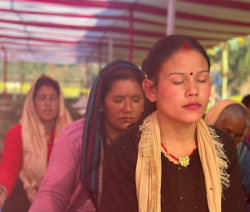
Mahila Dhyan Vidya Peeth was the first organization of women in the world that was established in India by Maharishi Mahesh Yogi with the mission of bringing the Transcendental Meditation technique and knowledge of Veda to girls and women. The fiftieth anniversary of the founding of this groundbreaking organization was celebrated throughout India on February 15th. Since it’s inception, the organization has introduced the TM program to girls and women in schools, colleges, businesses, and women’s organizations throughout the country.
Mahila Dhyan Vidya Peeth was a foundation of Maharishi’s women’s movement. In essence, it was part of Maharishi’s broader effort to revive Vedic knowledge everywhere, with a specific focus on empowering women through meditation and education—and its spirit continues worldwide. The broad vision expanded into global women’s initiatives, including international TM organizations for women and residential programs in many countries.
On behalf of our American organization, TM for Women, we congratulate Mahila Dhyan Vidya Peeth for a half century of dedication and success.
Q and A
Q: How does the TM technique reduce chronic stress and burnout (rather than just acute distress), particularly for women in high-stress professions?

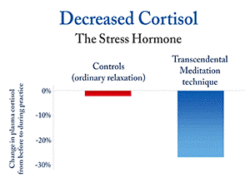
The Transcendental Meditation technique works differently from many stress-management methods because it doesn’t just calm the mind temporarily—it helps dissolve the accumulated physiological strain that underlies chronic stress and burnout. Unlike ordinary relaxation, TM produces deep rest in the body accompanied by a quiet state of awareness, often described in research as “restful alertness.”
During the TM practice:
- Metabolic rate drops (sometimes deeper than sleep)
- Breathing slows naturally
- The nervous system shifts out of chronic “fight-or-flight” mode
Over time, this allows the body to release stored stress chemistry, like cortisol and adrenaline residue. Chronic burnout is largely cumulative, so this daily reduction of stress is key.
TM allows the nervous system to reset.
Acute stress relief is a matter of simply calming symptoms. In contrast, chronic stress reduction is powerful and significant because it changes baseline functioning.
Regular TM practice helps:
- Normalize cortisol rhythms
- Reduce sympathetic overdrive (constant vigilance)
- Increase parasympathetic stability (recovery capacity)
This gradually lowers the default stress level, so new pressures cannot easily exhaust the nervous system.
Burnout is linked to the wear and tear from long-term emotional labor, responsibility, and suppressed stress. TM has been shown by published research studies to:
- Lower high blood pressure
- Improved heart-rate variability (resilience marker)
- Reduced inflammatory markers
These are indicators of true physiological repair, not just mood improvement.
Research on women practitioners suggests benefits in areas commonly affected by chronic stress:
- Hormonal balance and reduced stress-related dysregulation
- Improved sleep despite care-giving or shift work
- Reduced anxiety and emotional overload
- Greater resilience to multitasking and role strain
Women in stressful professions often operate in continuous micro-stress, not just crisis spikes. TM’s twice-daily practice provides deep rest that helps clear that subtle accumulation.
What women say

“Meditation is helping you to tap into something that’s already inside of you… that’s you, in essence. That’s something that was super-empowering for me, once I grasped that.”
— Cameron Diaz, wife, mother, actress, author, and entrepreneur who learned TM more than ten years ago.
Editor’s note: We’d love to hear your comments on the benefits you’ve received from the TM practice. And, with your permission, we’ll publish them here for other women to enjoy. Send your comment to info@tm-women.org