Author Ann Purcell Discusses Silence
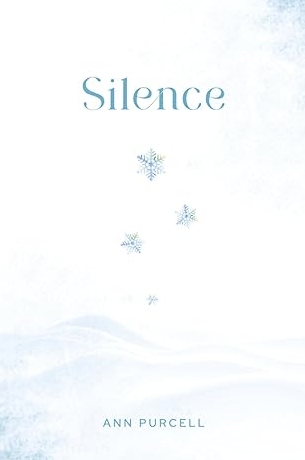
Ann Purcell is an author, poet, songwriter, philanthropist, and longtime teacher of the Transcendental Meditation technique, whose work blends spiritual insight with creative expression. She has written numerous books—including collections like Tender Flower of Heaven—and has contributed to publications such as the Huffington Post. Her new poetry book, Silence, is available on Amazon, and has the theme: “When the world grows loud, return to the silence within.”
Q- What inspired the collection Silence—and why poetry as the form for this work?
For almost 50 years I have begun the new year on a week long silent retreat. About six years ago, I started writing many poems during that week, and during my week of silence in 2025, I wrote enough to fill a book. I thought the title Silence and the poems themselves reflected my experiences during the times while on the silent retreats.
Q- How does Silence differ from your earlier books on meditation and transcendence?
In some ways they are similar. However, this series of poems are more specific reflections of my experiences in and out of meditation during weeks of silence.
Q- Can you describe what “silence” means to you personally—and how that is reflected in the poems? Please give us a few lines from one poem that especially embodies your experience.
There is a surface level of silence, when you are sitting in a quiet place—on a park bench or next to a pond, for example. The silence I am talking about in these poems is the inner depths of silence experienced during Transcendental Meditation—first as a silent still inner wakefulness at the source of thought. When you meditate regularly, over time, this inner silence reveals itself to be a blueprint of all the possibilities of creation.
Transcendence
January 4, 2025
Streams of thoughts,
more thoughts—torrents of thoughts,
less thoughts, more stillness,
more stillness, fainter thoughts
Being—no thoughts.
Darkness swells into light.
Stillness moves, ripples on a lake
which swell into waves.
Light breaks into particles
a thousand points of light everywhere
a sparkling sea,
an ocean in motion.
Waves settle down—
pure immovability.
Silence takes form.
Its structure reveals itself.
Points of light
open into frequencies—
gently humming sound particles.
Total absorption.
The only word to describe this
is
bliss.
Q- Do you write after meditating to communicate the fullest expression of inner silence in your words?
I write whenever the muse strikes. It can be any time of day. A thought will come into my head, which sparks an idea. Sometimes it can come when taking a walk—then I can’t wait to get home to write it down; or if I have my cell phone with me, I’ll record it. At other times ideas pop up during meditation which I will write down afterwards if they are relevant.
Q- Are there misconceptions about the transcendent field of silence that reading this poetry can address?
This is an interesting question. Some people think that personal activities such as walking, running, or painting are their “meditation” or their time for silence. Others have expressed to me that sitting still with their eyes closed for five minutes or listening to a guided meditation app is their silence. These situations do provide some degree of silence and calm, relative to their normal experiences. However, the silence of pure transcendence, pure consciousness, is so much more profound—because it goes beyond the field of activity and thought altogether where the mind can rest in its own unexpressed silent nature.
It’s not just subjective experience that shows this distinction. Scientific research has shown objective measures including brain waves, breath rate and other neurophysiological changes that show the difference between transcending during Transcendental Meditation and practices such as sitting quietly, practicing a mindfulness technique, painting, and running.
Q- Do you expect readers to experience silence by reading these poems or is the technique of transcending a necessity for the full experience.
Hopefully the readers will get an insight into the depths of silence—but verbally, one can only try to describe it. As the saying goes, “The taste is in the eating.” So yes, transcending is necessary for the full experience. I recommend that everyone learn the TM technique to effortlessly experience inner silence for themselves.
Experience inner silence. Contact a certified TM teacher.
About the Author
Janet Hoffman is the executive director of TM for Women Professionals, a division of TM for Women in the USA
More Posts by Janet
- The Story of Hurricane Helene and the Relief From Within Project: An Interview with Jeanne Ball
- Beauty and Joy, Even When the World is Too Much
- The Extraordinary Pianist Hiroko Sasaki: Silence in Performance
- Our Inner Advantage in an Unsettling World
- An Interview of Dr. Amy Knoblock-Hahn: Advancing Health Through Nutrition and Lifestyle