See our blog archive for a complete list of our articles in chronological order.
Blog
Yearning for More: The Quest for Enlightenment, Part Two
The Universality of TM and Transcendental Consciousness—the Basis of Higher States of Consciousness
The range of human life is not, as is generally thought, restricted to our various ways of living, sleeping, waking, playing, talking or behaving; these are only the gross levels of human values. The real, substantial value of human life is the bliss-consciousness that raises one to the high estate of eternal freedom while he is engaged in the day-to-day world of transitory values. —Maharishi
Our deeply felt “yearning for more in life” has its roots in the fact that our innate human capacity is so much more vast than our current experience. As an anxious, depressed teenager, when I first heard about the possibility of enlightenment, I was relieved, encouraged, inspired, and utterly fascinated. Since that time, the process of discovery has been extraordinarily rewarding. In this series of blogs on the quest for enlightenment, I will share my discovery of Maharishi’s teachings on higher states of consciousness.
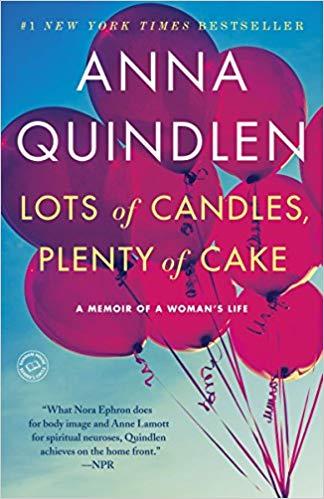
On Lots of Candles, Plenty of Cake and What We Missed between Birthdays
Anna Quindlen inspires, provokes with kindness, and makes her reader laugh and—more importantly—think. She is an expert on being self-aware, shedding light on subtle tendencies that women “of a certain age” share, and on giving us the comfort that sharing personal truths brings. She precisely and humorously captures and portrays every nuanced experience of mothers, wives, and women treated as second class employees on our emotional map between self-incrimination and self-congratulation.
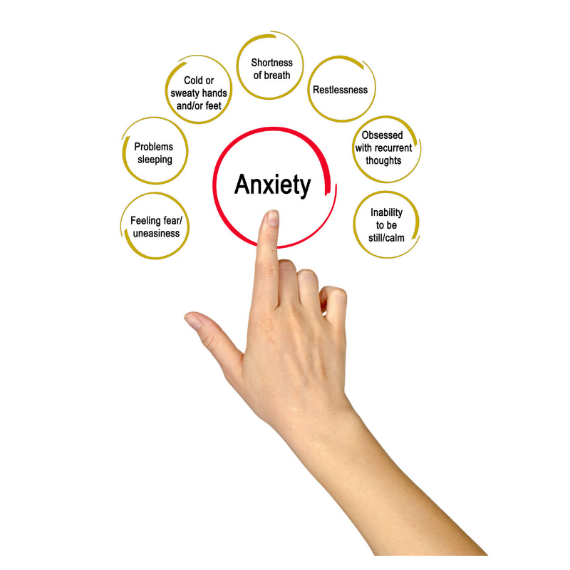
Anxiety as a Way of Life?
Until recently I hadn’t known that there was more than one kind of anxiety, but there is. It turns out that there is one measure of anxiety named state anxiety, which is related to specific
Making Technology Safe for Your Kids
As we hear more distressing accounts of children using social media sites and other technology to cyber-bully other children, sometimes with shockingly tragic results, you can’t help but think that there’s got to be a way to make technology safer for kids.
Moms often try to control their children’s use of technology, but that can only go so far. As in the recent disturbing case of Rebecca, a 12-year-old-girl in Florida, her mother had taken away her cell phone and restricted her use of social media sites such as Facebook and Twitter to protect her daughter from seeing nasty posts from a group of students who were targeting her daughter. But Rebecca later signed on to apps that the mother didn’t even know existed—such as ask.fm, Kik and Voxer. And the cyberbullying started up all over again, ending in a terrible tragedy as Rebecca took her own life.

Healing Your Two Hearts
Women are known to have a higher emotional intelligence (EI) than men, and that’s a good thing. In fact, for many of us, empathy, intuition, compassion and sensitivity to other people’s feelings are the beacon lights that guide us through each day.
Yet this emotional sensitivity and openness can backfire when we’re under stress. Researchers tell us that a woman’s brain is wired differently than a man’s, making women more susceptible to stress than men even when exposed to the identical triggers. As just one example, women in the military are twice as likely to develop PTSD than men.
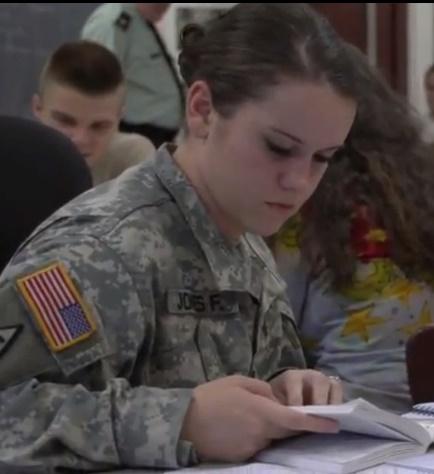
Being a Woman First
Women in combat are facing enormous challenges as they return home. Reintegrating into family life, finding housing, finding a job, being a mom and figuring out how to be a civilian again can be daunting.
Yet underlying all of these seemingly disparate roles a woman plays in the world is the role of being a woman. If a woman veteran can nourish her most essential self, the subtle essence of feminine beauty, softness and pride, she has come a long way in finding her place in the world.
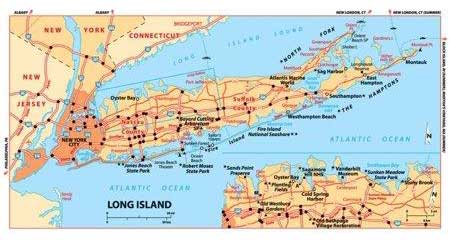
From the Blues to Bliss: Transcendental Meditation is Transporting Long Island Women
Let’s face it ladies: the statistics are grim. There’s a plague of stress in the United States. It’s in our schools, our workplaces and our homes. Studies show that one out of four visits by women to physicians involves a prescription for depression. Women today claim to be, on average, forty percent less happy than women forty years ago. There are now more women than men in the workforce, but we are more susceptible to stress at work. Heart disease, already the number one cause of fatality among women, is increasing.
Intuition from the Field of Consciousness
Consciousness is a fairly controversial topic in the field of psychology. But rather than go into all that right now, let’s just talk about consciousness as an aspect of the individual that we often refer to as ‘wakefulness’. That which makes us conscious is that which makes us awake and attentive.
Yearning for More: The Quest for Enlightenment, Part One
Most of us have experienced a deep yearning for something more in life—a sense that there is more than the status quo of work, school, relationships and family. We wonder: what is this life about? My search started intensely at the age of 13.
As the daughter of a minister, I shared my father’s commitment to ethical action and altruism. In junior high and high school I did volunteer work for programs of poverty and illiteracy alleviation, working with disadvantaged children. But it was clear that the unhappiness I felt in my own life was affecting my ability to help others. I remember once working with a child who came from a troubled background, and as he cried, I cried too—in empathy, sympathy, and bewildered frustration. I thought: how can I truly help this child and family? I wondered—how can I help myself, full of anxiety and depression? If I myself was suffering and unaware of how to find more fulfillment, how could I help others to live more fully?

Protecting Young Women from Anxiety
Last year I spent some time helping a high school girl (let’s call her Katya) with her writing. Katya is an excellent writer, college-bound, but at the beginning of her critical junior year, she choked with anxiety and didn’t turn in a major paper for her honors English class. And got a D for the first semester.
As a family friend, I was enlisted to help build up Katya’s confidence, calm her anxiety, and boost her writing skills. Believe me, I felt a great deal of empathy for Katya. I remembered all too clearly my own teenage years, when writing a term paper was a matter of hacking my way through thickets of negative thoughts, quicksands of panic and swamps of self-doubt. Sometimes I would work so hard at writing a major paper that I would practically have a nervous breakdown.